Your Cart
Your shopping cart is empty.
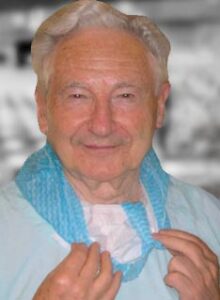
Jean Delaire (1923-2022) studied medicine in Nantes. His interest in stomatology was inspired by Dr Paul Landais, a stomatologist at Nantes University Hospital, who became his first mentor. He subsequently trained in the specialty at the Institute of Stomatology of the Faculty of Medicine in Paris, under such renowned teachers as Michel Dechaume, Pierre Cernea, Andrée Chaput, Lucien Lebourg and Gustave Ginestet.
He defended his medical thesis on 6 January 1953. It was entitled: The use of cylindrical skin grafts in complete cleft lip and cleft palate.
He defended his medical thesis on 6 January 1953. It was entitled: The use of cylindrical skin grafts in complete cleft lip and cleft palate.
Throughout his career, he brought together generations of surgeons, orthodontists and rehabilitation specialists involved in the management of growth disorders of the face and skull. Throughout his long and extraordinarily productive career, Jean Delaire published and taught tirelessly, both in his hospital department and at the university, and organised countless scientific meetings in France and across Europe.
Throughout his career, he brought together generations of surgeons, orthodontists and rehabilitation specialists involved in the management of growth disorders of the face and skull. Throughout his long and extraordinarily productive career, Jean Delaire published and taught tirelessly, both in his hospital department and at the university, and organised countless scientific meetings in France and across Europe.
The development of functional surgical concepts applied to the treatment of cleft lip and palate progressively superseded the other reconstructive techniques then in use. The highly refined reconstructive techniques developed by Dr Jean-Claude Talmant demonstrated the importance of incorporating Dr Victor Veau’s principles and his concept of embryological surgery.
These same principles of functional surgery were admirably applied by Professor Jacques Mercier to the correction of facial dysmorphoses, in accordance with the ideal facial architecture proposed by craniofacial analysis.
Jean Delaire acquired and developed a vast body of knowledge through his unique clinical experience and his insatiable curiosity about the basic sciences. He formalised this knowledge into a theory of craniofacial growth and taught it for many years as part of the University Diploma in Dentomaxillofacial Orthopaedics. This knowledge also remains accessible to all through hundreds of publications and countless engaging lectures.
Jean Delaire always shared his knowledge with anyone who wished to learn. As time passed and his strength gradually declined, he entrusted the dissemination of his work to three physicians from Nantes and Paris – a nod to the origins of his specialty. In 2020, the Institut Jean Delaire – Jean Delaire Institute was founded with the aim of bringing together, disseminating and further developing his work.
Although Jean Delaire has passed away, his legacy is destined to endure for as long as practitioners continue to seek the best possible treatments for their patients.
Your shopping cart is empty.